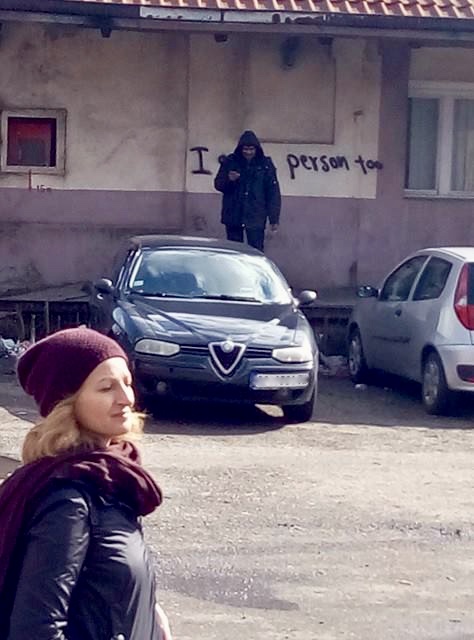
The first time I visited the derelict warehouses I was in shock, to say the least. When I went home, later that night, I had no appetite. It didn't feel right to me that I could offer my sympathies and company for a few hours, then just walk away to the comforts of my warm blankets, buzzing radiators, and unwavering refrigerator.
For most of us, food is an unquestionable reality. If we are hungry, we will eat; and in that regard, we are far luckier than we will ever come to appreciate.
The boys who spend their days and nights under the harsh roofs of the Belgrade warehouses, are not so fortunate. They consider themselves lucky if they have more than one meal a day. That one meal tends to be hot soup distributed by
Hot Food Idomeni, an NGO that began by aiding refugees in Northern Greece.
When I reached out to HFI for comment on how they handle the distribution process, a representative stressed their commitment to approaching refugees with humour and dignity. All while fostering trust and maintaining high quality at understandably high quantities.
I wanted to do my part as well, by providing more than just questions and curiosity. So I collected over 5,000 Serbian dinars (roughly around 50 dollars) and purchased 6 bags worth of food. From rice and lentils to biscuits and bread to salt and sugar, and much more. As Ahmed helped me distribute the contents, the resident refugees began to collect around us in a line.
There was no pushing or shoving to reach food before someone else. The level of respect within those walls never ceases to mesmerize me. Young men came in line to collect anything willing to be given to them, then they would return to the various fires created within the building and share what they have with those who had remained seated.
Furthermore, I always felt safe and even respected amongst them. Every single person in those buildings made sure to keep a "respectable distance", as my military companion phrased it. There was one instance when he walked outside to answer a phone call, and the men around me took a step back, almost in unison, while I left alone with them. We continued talking, the same conversation as with my chaperone, always keeping and maintaining eye contact.
Above everything we had brought, two items were the most important to them, and the most cherished. Sanitary hand wipes and apples.
Even with my limited knowledge of Arabic, I understood the deep gratitude behind the simple repetition of "Shukran" (English: thank you) as I handed them each an apple. Some simply wiped the apples across their shirts, as though polishing them, before devouring the fruit in a matter of seconds. Others cradled their apples, and stashed them in various places, typically around their sleeping quarters, for later.
One man ripped open the small package of hand wipes before it had even completely left my hand. He began ferociously scrubbing his palms, desperate to sanitize them. Then, he walked back to his blankets on the floor, still cleansing his hands with such force I feared he would rub them raw.
With everything in our bags distributed, Ahmed walked with me through the warehouse again. A group of boys were boiling water for the rice we had given them and extended me a torn off piece of the loaf of bread I handed one of them earlier, asking me to join them in broken English.
This is the second time I was invited to share a meal in the warehouses. These resilient people had so little for themselves, yet saw everything as shareable.
So I responded with an Arabic phrase I had learned just the night before: "
Bil-hanā' wa ash-shifā'"
May you have your meal with gladness and health.